
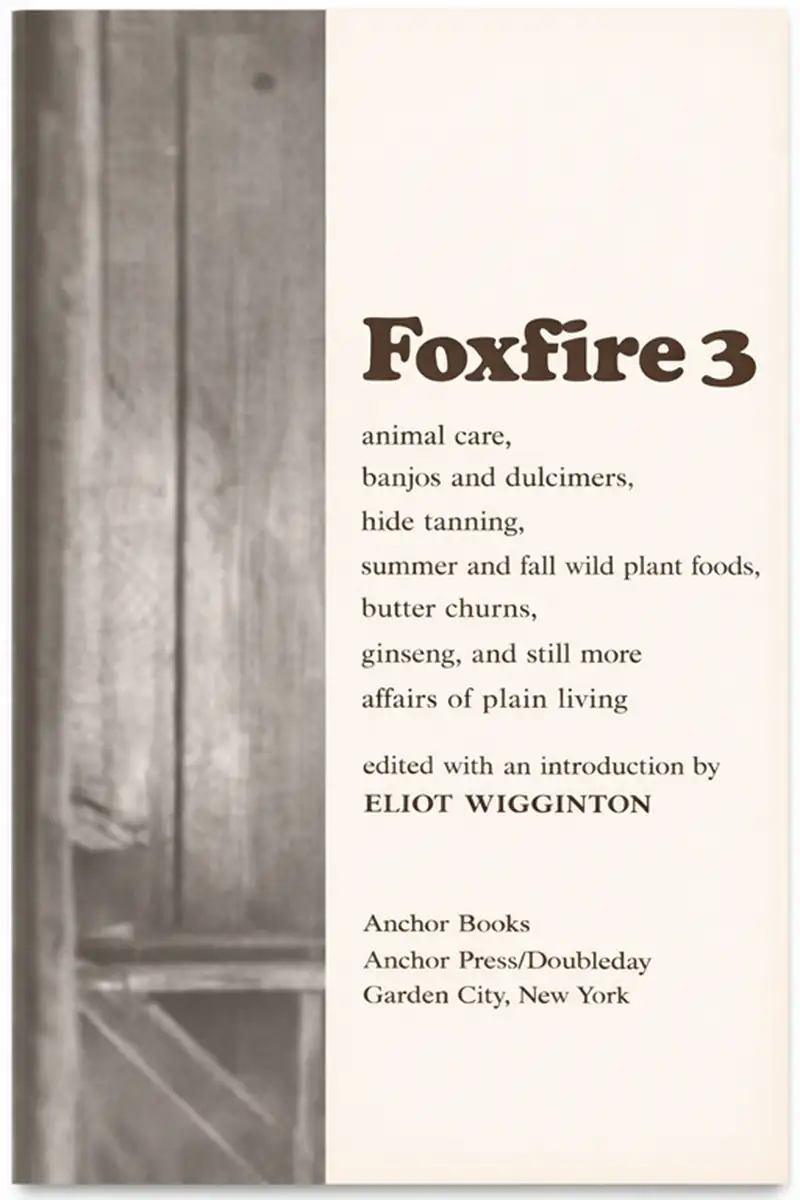
The Foxfire Book, Volume 3: Work, Craft, and Living Knowledge
Traditional Skills, Rural Labor, and Everyday Self-Sufficiency
The Foxfire Book, Volume 3 continues the original Foxfire Project’s mission of preserving Appalachian knowledge by documenting how people worked, built, raised animals, and sustained themselves through everyday labor. Rather than presenting survival skills as emergency techniques, this volume records how self-sufficiency functioned as a normal part of life.
Unlike modern how-to manuals, the material in Foxfire Volume 3 was not written to instruct outsiders. Instead, it captures real people explaining how they learned their skills, why they used certain methods, and how those practices fit into seasonal routines and community life.
As a result, the book offers something rare: practical knowledge grounded in lived experience rather than theory.
A Different Kind of Skills Book
Most modern preparedness or homesteading guides focus on efficiency, optimization, or step-by-step instruction. Foxfire Book, Volume 3 takes a different approach. The skills documented here were learned through repetition, responsibility, and necessity.
People did not raise livestock, tan hides, or preserve food as hobbies. These activities were essential to survival, income, and family stability. Consequently, the book shows how skills evolved through problem-solving and adaptation rather than formal training.
This makes the volume especially valuable for readers interested in:
Long-term self-reliance
Sustainable rural living
Traditional craftsmanship
Low-tech systems that function without modern infrastructure
Readers exploring broader topics like homesteading or off-grid living will find this volume aligns naturally with those goals.
Learning Through Work and Responsibility
In Foxfire Volume 3, knowledge is inseparable from labor. Skills appear as part of ongoing work rather than isolated tasks. Livestock had to be fed daily. Tools had to be repaired when they broke. Food had to be preserved before winter arrived.
Because of this, the book emphasizes:
Observation over instruction
Experience over theory
Responsibility over convenience
Instead of telling readers how to do something, the material explains how people figured it out. This perspective makes the book relevant well beyond its original Appalachian setting.
Readers researching self-sufficiency or traditional skills will recognize many of the same principles still apply today.
Skills and Practices Documented in Volume 3
The Foxfire Book, Volume 3 documents a wide range of traditional practices that supported rural households year-round. These include:
Animal Care and Livestock Work
Feeding and handling livestock
Daily animal care routines
Seasonal responsibilities tied to weather and food supply
Hide Tanning and Leatherworking
Preparing animal hides
Natural tanning methods
Using leather for tools and household items
Traditional Music and Craftsmanship
Building handmade musical instruments
Toolmaking with locally available materials
Repairing and maintaining equipment
Plant Knowledge and Foraging
Ginseng harvesting practices
Identifying useful wild plants
Understanding seasonal availability
Readers interested in foraging and plant identification will find these sections especially relevant.
Food Production and Preservation
Butter churns and home dairy methods
Smokehouses and meat preservation
Sorghum production
Apple butter making
These sections closely align with modern interests in food preservation and seasonal living.
Household Tools and Everyday Implements
Handmade brooms and brushes
Simple tools designed for repeated daily use
Maintenance techniques to extend tool life
Each section is drawn directly from interviews with people who practiced these skills throughout their lives. As a result, the book preserves not only how tasks were done, but why they were done that way.
How Foxfire Volume 3 Differs From Modern Survival Manuals
A common question among new readers is whether Foxfire functions as a survival guide. It does not — at least not in the modern sense.
Modern survival manuals often focus on:
Emergency scenarios
Short-term disruptions
Rapid skill acquisition
Foxfire Volume 3 focuses instead on:
Long-term resilience
Skill mastery over years
Systems that support everyday life
This makes it especially valuable for readers interested in preparedness as a lifestyle rather than an emergency response.
The book demonstrates that resilience is built gradually through consistent work, not through one-time training or equipment purchases.
Knowledge Preserved Through People
One of Foxfire’s defining strengths is its focus on individuals. The book does not present abstract techniques detached from context. Instead, it records who performed the work, how they learned it, and why it mattered.
Stories, personal accounts, and practical explanations appear throughout the volume. These narratives reinforce the importance of:
Community cooperation
Shared labor
Knowledge passed between generations
Because the information is tied to real people, it remains grounded and practical rather than theoretical.
Why Foxfire Book, Volume 3 Still Matters Today
Although the book documents practices from a pre-industrial rural culture, its relevance has not diminished. In many cases, it has increased.
Modern households face:
Supply chain instability
Rising costs
Increased dependence on complex systems
The practices described in Foxfire Volume 3 rely on:
Local materials
Simple tools
Repeatable processes
These characteristics make the knowledge especially useful for:
Rural households
Homesteaders
Off-grid systems
Situations where modern services are unreliable
Readers exploring rural living or low-tech skills will find the material directly applicable.
Who Will Benefit Most From This Volume
The Foxfire Book, Volume 3 rewards readers who value depth over convenience. It is particularly useful for:
Homesteaders and small-scale farmers
Off-grid and rural households
Preparedness and survival researchers
Traditional craftspeople
Food preservation and seasonal living enthusiasts
Because the book documents complete systems rather than isolated tips, it serves best as a long-term reference rather than a quick read.
Free PDF Access on Ardbark
Ardbark provides The Foxfire Book, Volume 3 as a free PDF to help preserve traditional skills and rural knowledge. Making these works accessible supports the continued transmission of practical experience that once sustained entire communities.
By offering free access, Ardbark supports education, self-reliance, and historical preservation while building a permanent library of survival-relevant knowledge.
Readers exploring related topics such as homestead tools or traditional food methods will find strong overlap with this volume.
Final Perspective
The Foxfire Book, Volume 3 captures work, craftsmanship, and responsibility as they existed in everyday life. It does not function as a modern checklist or instructional manual. Instead, it records how people lived well with limited resources, simple tools, and shared effort.
For readers seeking durable skills rooted in experience rather than convenience, this volume remains an essential part of the Foxfire series and a valuable addition to any self-reliance library.