A compact introduction to beekeeping
Bee Primer for the Prospective Beekeeper by C. P. Dadant is a short illustrated introduction to the work and equipment of an apiary. Published by G. B. Lewis Company of Watertown, Wisconsin, it carries a 1914 copyright in Dadant’s name. The title identifies him as editor of the American Bee Journal. The booklet combines elementary explanations with illustrations of hives, colony life and equipment. Its manufacturer-issued setting is visible in the original pages, making it both a beginner’s reference of its time and a record of how beekeeping was introduced to prospective customers.
The colony and its comb
The primer introduces queens, workers and drones and discusses the development of brood. It then turns to comb, foundation and propolis. These subjects provide the vocabulary needed for the equipment and management sections that follow. Illustrations of bees, queen cells and comb help a reader recognize the structures being described. The biological explanations reflect the understanding and language of 1914. Their value today is primarily in showing the framework used by an influential historical beekeeper to explain a colony’s organization to a newcomer.
Hives and necessary apparatus
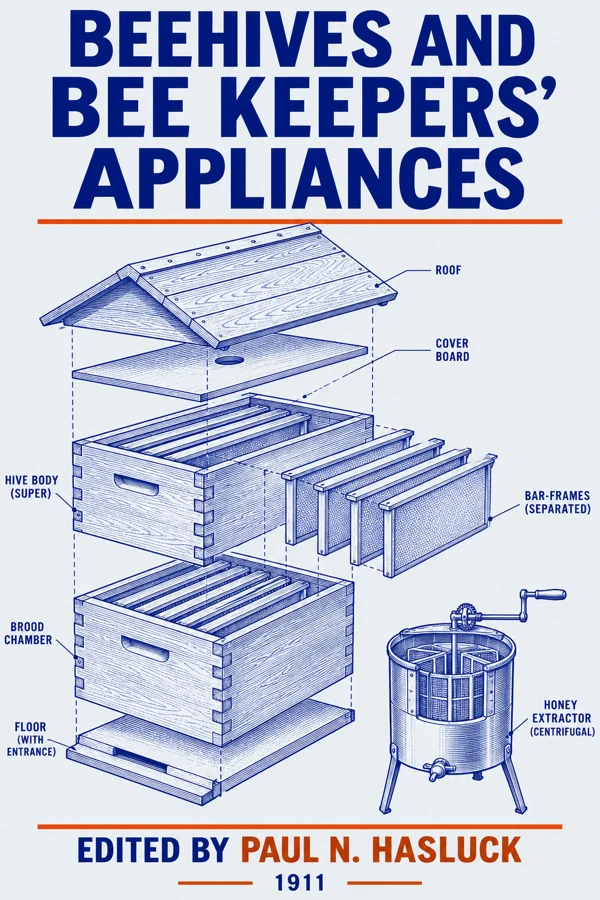
The equipment material identifies the hive and its principal parts, including the body, bottom, cover, brood frames, division board and sections. Smokers, veils and gloves appear in the handling discussion, while later illustrations show honey-processing equipment. This gives a beginner a sense of the range of objects involved before encountering a more detailed manual. It also helps readers studying old catalogs connect a name with a pictured object. The booklet is concise, so it introduces the purpose of equipment rather than supplying an extensive construction plan for every item.
Seasonal work and honey production
The subject index includes prevention of swarming, artificial swarming, queen rearing, comb-honey production and extracted honey. Robbing, feeding and wintering also receive attention. These topics sketch the main concerns of a beekeeper’s year and show why colony management cannot be reduced to placing a hive outdoors and waiting for honey. Dadant’s arrangement is useful for historical study because it brings the colony’s behavior and the beekeeper’s desired product into the same overview. A reader can use the index to locate a specific topic without working through the whole booklet in one sitting.
Locating an apiary and getting started
The later material includes apiary location, instructions for beginners and advice to beekeepers. Horticulture and the relationship between bees and poultry appear among the indexed subjects. Such topics place the hive within a wider farm or garden setting. This is the booklet’s clearest connection to homesteading: bees are considered alongside the land, plants, other activities and practical arrangements around a home. The final pages also retain promotional material, which should be understood as part of the original publication rather than as a current offer.
Reading it as a historical primer
The booklet includes handling and disease advice that belongs to 1914 practice. It should be used to understand that historical approach, while present-day colony-health decisions and handling require current instruction. The short format is best suited to orientation, comparison and research. It does not replace a full modern beginner’s course or the instructions for contemporary equipment. For a reader of older beekeeping books, however, the compact explanations and pictures can make an unfamiliar term or operation easier to place in context.
Audience and format
This primer will interest beekeeping historians, collectors of agricultural trade literature and readers comparing early beginner guides. It is also useful for identifying the equipment and topics that an introductory booklet of the period considered essential. The 28-page PDF includes its illustrated title page, indexes, short practical sections and original advertising matter. Its small size makes it easy to browse alongside a longer reference. Dadant’s concise treatment offers a view of the relationship between colony life, tools, seasonal tasks and honey production in early twentieth-century beekeeping.
Book details
- Title: Bee Primer for the Prospective Beekeeper
- Author or editor: C. P. Dadant
- Date: 1914
- Publication: G. B. Lewis Company, Watertown, Wisconsin; copyright 1914
- Language: English
- Format: PDF; 28 digital pages
- File size: 1,971,292 bytes
Explore more practical books in Homestead.