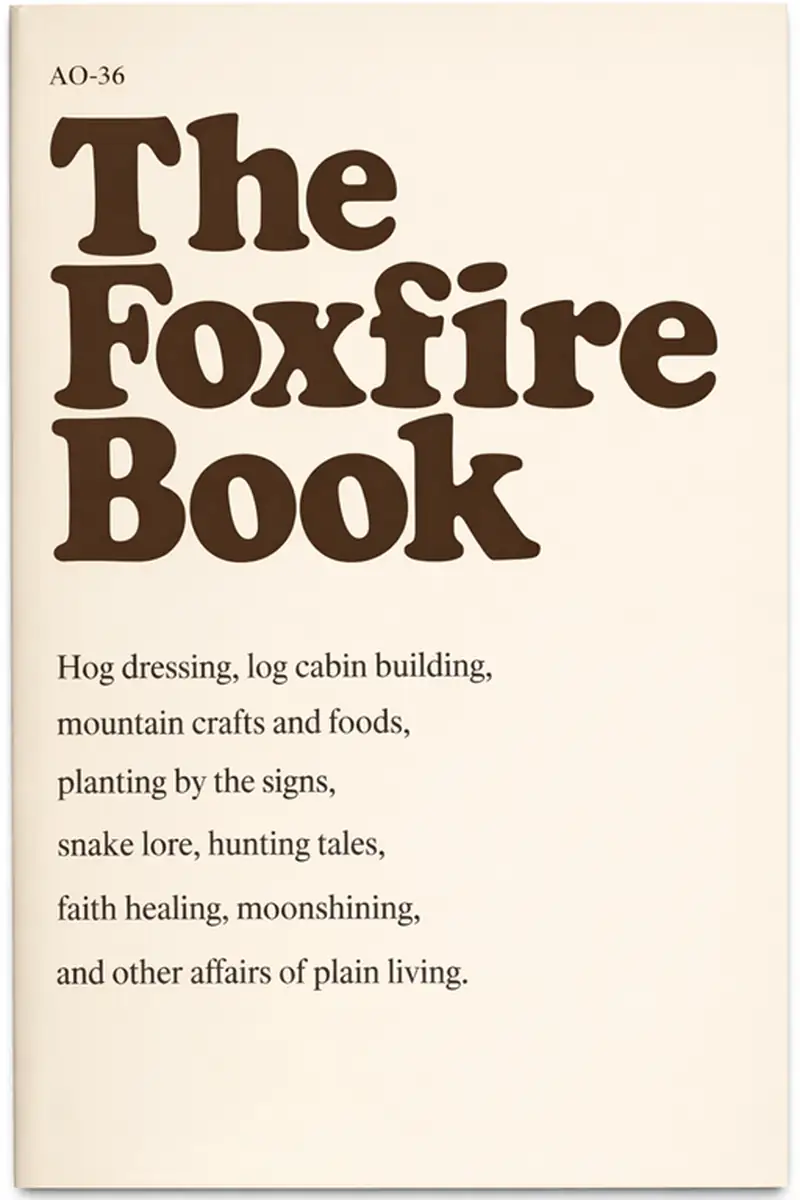
The Foxfire Book: Traditional Skills, Crafts, and Self-Sufficient Living
Appalachian Knowledge, Plain Living, and Practical Survival Skills
The Foxfire Book is a landmark record of traditional Appalachian knowledge, documenting the everyday skills, crafts, and practices that sustained rural communities long before modern conveniences existed. Compiled through firsthand interviews with elders in the Appalachian Mountains and edited by Eliot Wigginton, the book preserves practical knowledge that was once passed down orally from generation to generation.
Rather than presenting theory or modern instruction, The Foxfire Book records how people actually lived—how they built homes, prepared food, hunted, healed, farmed, and survived using local materials and hard-earned experience. As a result, it remains one of the most authentic resources available for anyone interested in self-sufficiency, traditional skills, and plain living.
The Purpose and Historical Importance of The Foxfire Book
The primary purpose of The Foxfire Book is preservation. During the mid-20th century, traditional rural knowledge in Appalachia was disappearing rapidly due to modernization, industrialization, and changing economic systems. The Foxfire Project set out to record skills that would otherwise have been lost.
What makes the book historically valuable is its method. The information was not filtered through academic interpretation or rewritten as instruction manuals. Instead, it was captured directly from the people who practiced these skills daily.
Because of this, the book explains not only how tasks were performed, but why they mattered. This context gives modern readers insight into complete systems of living rather than isolated techniques.
Readers interested in traditional skills or self-sufficiency will recognize the depth and realism this approach provides.
A Record of Living Knowledge, Not a Manual
Unlike modern how-to guides, The Foxfire Book does not teach skills through step-by-step instruction. Instead, it documents how people learned through observation, repetition, and responsibility.
Skills were not hobbies. They were necessities.
Homes had to be built. Food had to be preserved. Tools had to be repaired. Knowledge was tested daily, refined over time, and shared within families and communities.
This makes the book especially valuable for readers exploring homesteading, off-grid living, or low-technology systems that function without modern infrastructure.
Skills and Practices Documented in The Foxfire Book
The Foxfire Book spans a wide range of traditional Appalachian skills and cultural practices, all presented through firsthand accounts and lived experience.
Food, Hunting, and Preservation
Hog dressing and meat preservation
Traditional food preparation methods
Hunting stories and wildlife knowledge
These sections align closely with modern interest in food preservation and long-term resilience.
Building and Construction
Log cabin building
Traditional construction methods
Tool use and material selection
The construction knowledge reflects a time when homes were built with local resources and maintained for generations.
Crafts and Everyday Tools
Mountain crafts
Handmade tools and household items
Repair and reuse practices
This craftsmanship highlights durability over convenience.
Agriculture and Plant Knowledge
Planting by the signs
Folk agricultural knowledge
Seasonal awareness and observation
Readers interested in seasonal living and traditional farming methods will find these sections especially relevant.
Belief, Healing, and Cultural Practices
Faith healing and traditional remedies
Snake lore and regional natural history
Moonshining and rural self-reliance practices
These topics provide insight into how belief, survival, and culture intersected in everyday life.
Each subject is presented through real voices, preserving both technique and worldview.
Why The Foxfire Book Still Matters Today
In an era of fragile supply chains, rising costs, and increasing dependence on complex systems, The Foxfire Book offers something rare: knowledge that does not rely on modern infrastructure.
The skills documented throughout the book depend on:
Observation rather than technology
Local materials rather than supply chains
Experience rather than formal instruction
For this reason, the book remains relevant to:
Homesteaders
Preppers and preparedness researchers
Off-grid households
Rural living and sustainability efforts
Readers interested in preparedness from a long-term perspective will find the book especially valuable.
Who Will Benefit Most From The Foxfire Book
The Foxfire Book is best suited for readers who value depth, context, and real-world experience. It is especially useful for:
Homesteaders and self-sufficient households
Survival and preparedness planning
Off-grid and rural living
Traditional crafts and skills preservation
Cultural and historical research
Anyone building a long-term skills or survival reference library
Because the content focuses on foundational practices rather than trends, it remains useful decades after its original publication.
Free PDF Access on Ardbark
Ardbark hosts The Foxfire Book as part of its mission to preserve and share high-quality knowledge related to survival, homesteading, and self-sufficient living. Making this work available as a free PDF ensures that traditional skills and rural knowledge remain accessible to future generations.
Readers exploring related topics such as plain living or low-tech skills will find strong overlap with this volume.
Final Perspective
The Foxfire Book is not a checklist or a modern survival guide. It is a record of how people lived when self-reliance was not optional and cooperation was essential.
For readers seeking practical skills, cultural preservation, and a deeper understanding of sustainable living rooted in experience, The Foxfire Book remains one of the most important and influential works ever published.