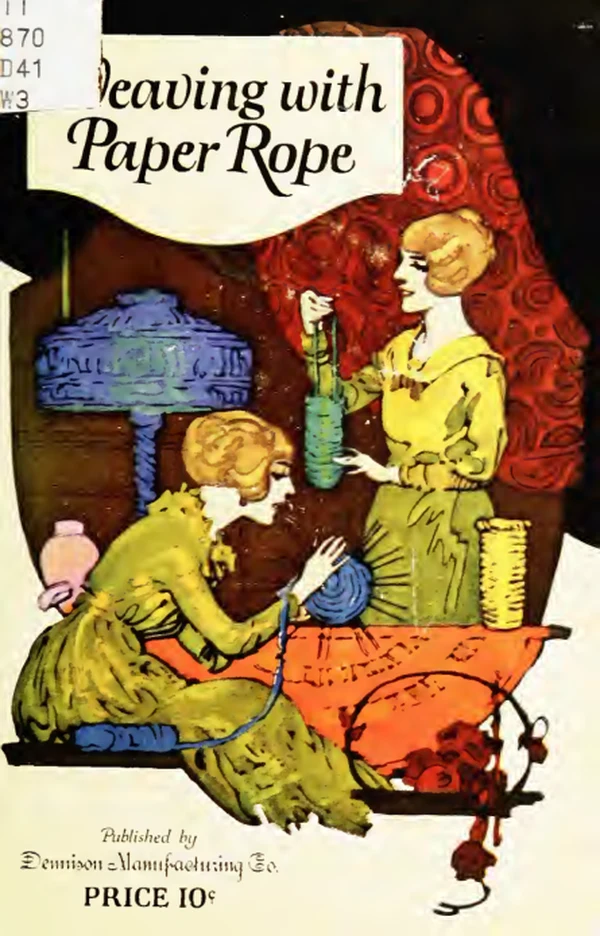
Bookbinding, edited by Paul N. Hasluck, is a practical illustrated handbook on turning folded sheets into finished volumes. This 1906 Philadelphia edition follows the binder’s work from tools and paper preparation through sewing, shaping, covering, and decorative finishing.
Its appeal lies in the connection between structure and appearance. The book explains the work hidden inside a binding as well as the processes that give the finished volume its character. Readers interested in making notebooks, understanding older books, or studying traditional hand skills will find a compact survey of the trade.
Book details
- Title: Bookbinding
- Editor: Paul N. Hasluck
- Publisher: David McKay, 610 South Washington Square, Philadelphia
- Publication year: 1906
- Edition: No numbered edition is stated on the title page
- Language: English
- Format: Illustrated scanned PDF with searchable text
- Length: 166 PDF pages, including preliminary and publisher material
- File size: 6.96 MB
From loose sheets to a sewn book
Tools, presses, and workshop appliances
The opening chapter introduces the tools and appliances used in binding. Engravings include a beating hammer, standing and lying presses, sewing frames, and the plough used to cut book edges. Several drawings show details of homemade equipment rather than simply presenting expensive workshop machinery.
This is one of the handbook’s useful features for readers exploring practical self-sufficiency. It treats the equipment as something to understand: how the parts are arranged, what each appliance does, and how a simple version relates to its professional counterpart. The illustrations help make unfamiliar workshop names less abstract.
Folding, beating, and sewing
The next sections describe folding printed sheets and preparing the gathered sections for binding. Beating and sewing receive a separate chapter, with attention to bringing the leaves together and arranging the back for the sewing process. The text also discusses rolling and the differences between small-workshop practice and production machinery.
These chapters show why the quality of a binding depends on preparation before a cover is added. Paper, folds, alignment, and sewing all influence the result. They also make the volume useful as a guide to the vocabulary of book construction, even for readers who begin with small practice pieces rather than a complete binding.
Shaping and covering the volume
Rounding, backing, cover cutting, and cutting the book edges follow the sewing chapters. The sequence leads into covering books, including the relationship between the leather back, corners, sides, and endpapers of a half-bound volume. The instructions consider practical details such as turning material over the boards and smoothing pasted surfaces.
Cloth-bound books and pamphlets are treated separately. A further chapter covers account books and ledgers, widening the subject beyond the ordinary reading book. This variety lets readers compare structures made for different purposes, rather than assuming that every volume is assembled in the same way.
Marbling, gilding, and finishing
A substantial part of the handbook explores the decorative side of binding. Chapters cover colouring, sprinkling, and marbling book edges; marbling paper; gilding edges; and sprinkling or tree marbling covers. Named marbling patterns and drawings help connect the movement of tools with the resulting designs.
The final chapter deals with lettering, gilding, and finishing covers. Illustrations show tools such as fillets and pallets and examples of the marks they produce. Together with the structural chapters, this gives the reader a view of both major sides of the craft: assembling a sound volume and finishing its visible surfaces.
Who will enjoy this handbook?
This book suits traditional craft enthusiasts, beginning book arts students, collectors interested in how older bindings were made, and readers building a library of workshop references. Its strongest use is as an illustrated historical explanation of processes and equipment, supported by an index for finding particular subjects.
It also connects naturally with the repair and making skills in Ardbark’s self-sufficiency collection. Learning how paper, thread, cloth, leather, and boards work together can deepen an appreciation of everyday objects and the skilled work required to make them.
About the scanned edition
The PDF preserves the original cover, numbered engravings, text, index, and period publishing material. The title page identifies Hasluck as editor. His preface describes the handbook as a compilation of practical writing, including material by a working foreman bookbinder and William Norman Brown.
Searchable text has recognition errors, and the scan includes library markings. Consult the page images when checking a technical term, diagram, or measurement. Period recipes and treatment methods should be understood in their historical setting; valuable or fragile books are best assessed by a trained conservator before any alteration.
Read Bookbinding
Explore the original illustrated handbook in the 6.96 MB PDF below.